The Natural History of Selborne
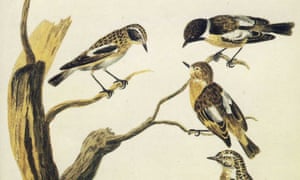
Gilbert White, 1788-89
Like a series of the best possible pastoral letters in a parish magazine, local clergyman Gilbert White, instead of worrying over the souls of his human flock, attends in exploratory and enlightened prose to nature: the comings and goings of Timothy the tortoise, a nightjar churring with such vigour on the roof of a gazebo that its occupants struggle to drink their tea, the difficulties of growing melons in England, the vexed question of whether swallows hibernate, the musical life of owls hooting in three different keys, and the separation (for the first time and entirely without optical assistance) of three leaf-green warblers.
The Voyage of the Beagle
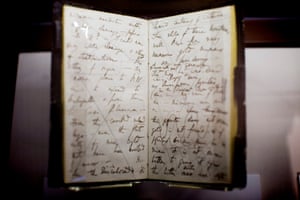
Charles Darwin, 1839
With Gilbert White’s Selborne, Darwin’s journal is the second great gift to the wider world of nature writing from English literature and English looking. Easier to read and more immediate than On the Origin of Species, his subsequent masterpiece, the Voyage records the fieldwork (on the Galápagos and elsewhere) and the growth of Darwin’s mind. Elizabeth Bishop (great nature-noting poet herself) wrote: “Reading Darwin one admires the beautiful solid case being built up of his heroic observations… and then comes a sudden relaxation… and one feels the strangeness of his undertaking, sees the lonely young man, his eyes fixed on facts and minute details, sinking or sliding giddily off into the unknown.”
Silent Spring
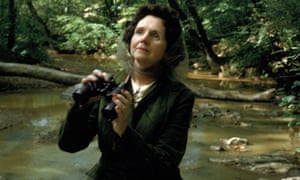
At the other end of the savagely exploitative century from Melville came a book that woke up the world, or at least spoke loud and clear to its sleepwalking citizens. Carson’s account (she was a research biologist) of the devastating impact of the accumulation of insecticides up food chains and into ecosystems was angry and brilliant. What had blithely been thought of as the balance of nature was seen to be increasingly skewed. Here was an early but decisive news bulletin from the anthropocene – the world where just one species was calling the shots and with disastrous effect.
The Book of the Green Man
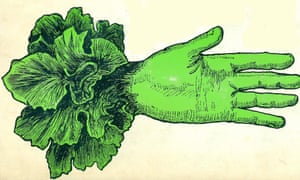
Ronald Johnson, 1967
A new reprint of a barely known long poem makes it possible to recommend this extraordinary work. Johnson was an American poet and cookery writer who walked through England in 1962-63 and built an interconnected series of season songs out of what he saw and what he read: Gilbert White, Samuel Palmer, the Wordsworths, John Ruskin and Francis Kilvert, among many other keen lookers, are sampled as if Johnson had borrowed their eyes. “His observation,” Christopher Middleton wrote, “is microscopic, but his sense of place drills through to the mythic substrata.” A revelation in waiting.
Nature Cure
Richard Mabey, 2005
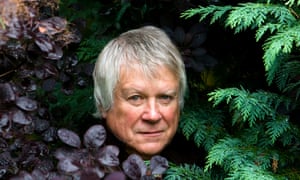
A memoir of depression that is anything but miserable. Lifelong naturalist and writer Mabey, whose pension, he says, is being paid by the continuing success of his groundbreaking Food for Free (1972), fell ill to the point where the natural world itself seemed sick and unable to offer him any respite. Nature Cure is his account of how moving east from the Chilterns to Suffolk and its fresh landscape, its barn owls and hedgerow flowers among other surviving nature, brought Mabey back to life. He met a marvellous woman too and the antidepressant drugs helped but his book sings with love and wonder as much as it brilliantly interrogates the power of the natural world to make us feel good.
African Adventure
Willard Price, 1963
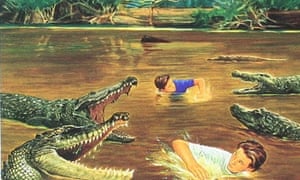
Best read before the age of 10, the Adventure series ricochets with animal-triggered escapades as brothers Hal and Roger travel the world’s wild places, collecting creatures and getting into dastardly scrapes. Nature is red in tooth and claw but the naked ape is the most fearsome species of all. It is almost certain that everyone who works for the BBC’s Natural History Unit, or has aspired to, will have wolfed down the breathlessly thrilling storylines of these books. Next stop: Gerald Durrell (who did all this for real, or so he wrote) and Redmond O’Hanlon (Into the Heart of Borneo; In Trouble Again; Congo Journey).
An Introduction to Behavioural Ecology
Nicholas B Davies, John R Krebs and Stuart A West, fourth edition, 2012
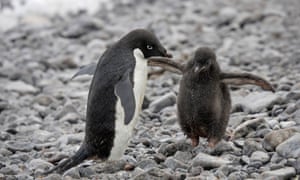
A student textbook so well written that anyone would benefit from reading it who wanted to know how the natural world fits together and operates in the relentless truth of evolution. The influence of natural selection on behaviour makes for some of the greatest stories imaginable: the struggle of animals to survive, their cooperation and conflict. One of the authors (John Krebs) has been at the heart of the debate about badger culling (he’s against); another (Nick Davies, Cuckoo: Cheating by Nature) has just published a superb account of one of the most extraordinary evolutionary arms races that we know about.
The Faber Book of Beasts
Edited by Paul Muldoon, 1997

No comments:
Post a Comment